Holistic Dog Food

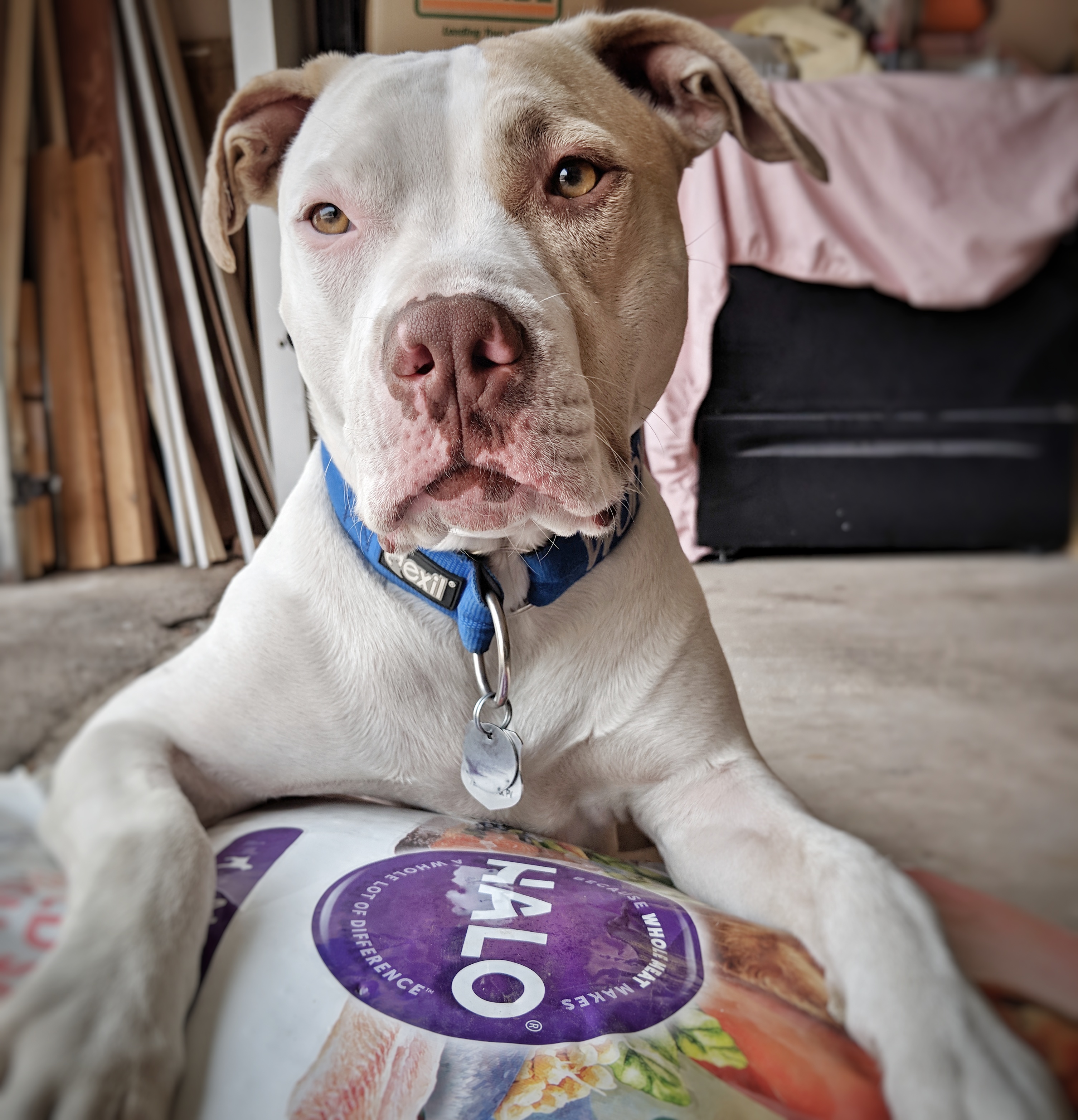
DAVEY THE DOG’S MOM LOVES HALO INGREDIENTS

August 5th, 2009 by Diane Herbst

Davey the dog’s mom switched to Halo for an important reason:

“We regularly supplement Davey’s daily diet with things like carrots, berries, apples and other whole foods,” she writes on her blog.

“So having an actual whole food in Davey’s daily meal makes me feel great about what I feed him,” she writes. “The Halo dry food ingredient list reads like a healthy grocery list and not a chemistry experiment.”

The Halo dry food ingredient list reads like a healthy grocery list and not a chemistry experiment.

Davey, we hope you are enjoying your wholesome, well-rounded meals!!

Rss feed subscribe Bookmark and Share

ACTOR BENJAMIN MCKENZIE’S DOG LOVES HIS HALO

April 8th, 2009 by Diane Herbst

Actor Benjamin McKenzie, a star of the hit TV show The O.C., appeared on the Ellen Show April 2 and raved about how his sweet brown and white pit bull, Oscar, loved eating his Halo.

McKenzie, star of the new NBC cop drama Southland premiering April 9, received a year’s worth of Halo from Ellen last April when he appeared on her show.

Oscar was found by a friend, abandoned in a park. McKenzie said at the time he thought the dog was used as bait for dog fighting because he was so meek. Oscar was named for the character ‘Oscar’ from ‘The Odd Couple’ because he acts like an old man, McKenzie tells Ellen.

Rss feed subscribe Bookmark and Share

Type of Pet Food Can Cause Stomach Upset

February 26th, 2009 by Dr. Donna Spector

Ashley from Texas wrote in about her dog with a sensitive stomach, and that he vomits frequently. She asks which of Halo’s food would be good for him.

Halo does not make any specific “sensitive stomach” dog food formulas, however, we feel our foods are appropriate for all dogs (even those with touchy tummies!) given the high quality ingredients.

Recent research suggests that it may actually be the size or quality of the protein in most commercial pet foods that causes adverse digestive reactions. Many pets are also sensitive to fillers (like corn and rice) and many adverse reactions (such as gas, bloating and diarrhea) have been linked to these sub-standard pet food contents. Halo foods contain no such fillers!

As always, if you have a pet with a sensitive stomach, transition them to Halo slowly–over 1-2 weeks.
day 1, 2, 3 and 4: 75% old food, 25% Halo
day 5, 6, 7 and 8: 50% old food, 50% Halo
day 9, 10, 11 and 12: 25% old food, 75% Halo
day 13 +: 100% Halo

If at any time during this transition your pet has any digestive upset, return to the previous amount being fed and stay there for a few more days before starting the transition again. Good Luck and keep us posted!

Rss feed subscribe Bookmark and Share

Halo Helping Homeless Boxers

February 25th, 2009 by Diane Herbst

In the network of Adopt A Boxer Rescue foster homes scattered around the Northeast live about 70 homeless dogs eating like kings, thanks to Halo’s recent donation of 5,808 cans of Spot’s Stew.

“The Halo food is invaluable, its high quality helps us to nurture our many sick and neglected dogs back to health,” says Kim Barnett of Madison, Ct., a dog behavior consultant currently fostering two dogs (see photos) for the rescue. “And the food absolutely enables you to open your home to more dogs. Everyone considers their financial condition when they consider fostering a dog.”

The donation couldn’t have come at a better time for the all-volunteer group, says Barnett.

Adopt A Boxer Rescue had been receiving several tons of top quality all-natural food every month from a wholesaling company that could not sell its torn or out-of-date bags, Barnett says. Just before Christmas, the company decided to sell the food to Amish farmers who have puppy mills — inhumane breeding facilities that keep dogs caged their entire lives for the sole purpose of producing puppies.

Ironically, Adopt A Boxer Rescue saves many boxers from the mills, dogs who are ill or who can no longer produce puppies. “They (the farmer) will call us and say, ‘Do you want to come and get this dog in the next half hour before I shoot it?’” Barnett says, noting that many of the dogs saved from the mills are unable to walk well because they have spent their entire lives enclosed in a wire-floored cage. For the company to begin selling the food to the Amish puppy millers “was an emotional slap in the face,” Barnett says.

However, the dogs are more than content with their new menu. There is Eve, the rescue’s white boxer who has a genetic defect preventing her from swallowing properly; when Eve was rescued she looked like a tiny, hairless rabbit. “It’s been a long haul to get her to get weight on,” says Barnett, noting that Eve would oftentimes throw up due to her ailment.

Eve now dines on three large cans of Spot’s Stew a day. “It’s doing wonders for her,” says Barnett. “You want to feed a dog like Eve the least amount of food possible, so the higher the quality the less she needs to eat, and because of the consistency it is easier for Eve to swallow the food. She is getting maximum nutrition in an easy-to-swallow formula.”

Each year, Adopt A Boxer Rescue finds permanent homes for some 400 dogs, and have helped thousands of pups get a new life. The group has dogs up for adoption in Connecticut, Delaware, Maine, Maryland, Massachusetts, New Hampshire, New Jersey, New York Pennsylvania, Rhode Island, and Vermont.

Rss feed subscribe Bookmark and Share

Tips on Lowering Veterinary Bills and Pet Expenses

February 18th, 2009 by Dr. Donna Spector

With the economy down and jobs disappearing, many pet owners are foregoing pet healthcare because they just can’t afford hundreds of dollars in vet bills. While it is still important to visit your veterinarian yearly for an examination, you can cut out many unnecessary tests and procedures by keeping your pet as healthy as possible throughout the year. Not only is this money saving, it is great for your pet’s health and longevity.

1. Invest in Quality Food—choosing a high quality natural pet food is your best chance at long term pet health. The right food can help you eliminate problems with allergies, intestinal problems, obesity, diabetes and other food-related diseases. Although you will spend more at the check-out line, the overall investment should save you hundreds!

2. Avoid pet obesity—Obese pets can suffer from many costly conditions such as arthritis, high blood pressure, and diabetes just to name a few. Feeding your pet the correct portion will control unwanted weight gain and keep them out of the vet.

3. Avoid dangerous treats—many treats can become lodged in the esophagus, stomach, intestines or trachea (windpipe) of pets. Avoid things like rawhide chews, pig’s feet or other chews that are too hard and dissolve poorly.

4. Brush Teeth—pets suffer from the same dental problems as people and should have their teeth brushed daily to avoid costly veterinary procedures. Apply pet toothpaste to either a soft pet toothbrush or gauze wrapped around your finger to clean their choppers. Tooth and gum disease can result in infection, pain, loss of teeth and even organ damage in pets. A quick brush a day can keep the vet away! Click here to read more about proper dental care in pets.

5. Routine eye care. Keeping your pet’s eyes clean will contribute to their health and wellness by preventing irritation and infection that can be painful and possibly lead to loss of vision. Careful inspection and cleaning once weekly with an excellent natural product like Herbal Eye Wash to open clogged tear ducts and prevent infection will keep your pets eyes clear and bright. Click here to read more about proper eye care in pets.

6. Routine ear care. Keeping your pet’s ears clean will help prevent painful irritation and infection that can lead to hearing loss. Clean your pet’s ears once weekly with a natural pet product like Herbal Ear Wash to keep them out of the vet with costly ear infections. Click here to read more about proper ear care in pets.

7. Proper flea control. Fleas can be an expensive problem year round. Not only do they cause itching and sometimes troublesome hot spots—they can also infest your pet with intestinal tapeworms. There are many topical products available to control fleas. If you are looking for a natural approach, try an herbal dip with citronella and other oils that will aid in natural flea control.

8. Bath and groom your pet regularly—Choose a natural shampoo without detergents, colors or fragrances as these ingredients may contribute to allergic reactions. There are many instructional books and videos that can help you learn about proper pet grooming to minimize this expense. Don’t forget to wash your pet’s feet every time they go outside. This can help them avoid ingestion of chemicals that may be in the grass or on the sidewalks and streets.

9. Pet-proof your home and yard—Every year thousands of dollars are spent on treating pets for accidents and poisonings. Pet-proof your home so your pet has no possible access to rat bait, snail bait, ant bait, prescription medication, cleaning supplies or even the kitchen cupboards. Pets are amazing…they can smell chocolate through a cupboard door! Insure your yard is safe—that boards are not loose in the fence, the gate latches securely, the trash and recycling bins are sealed tightly and there are no hazards in the yard.

10. Exercise! Pets get the same health benefits that people do from exercise. Try it together…it will be healthy and fun for both of you!

Rss feed subscribe Bookmark and Share
SEO Powered by Platinum SEO from Techblissonline