
Ask a Vet

Ask a Vet: Pets and Dairy Products

July 24th, 2008 by Dr. Donna Spector

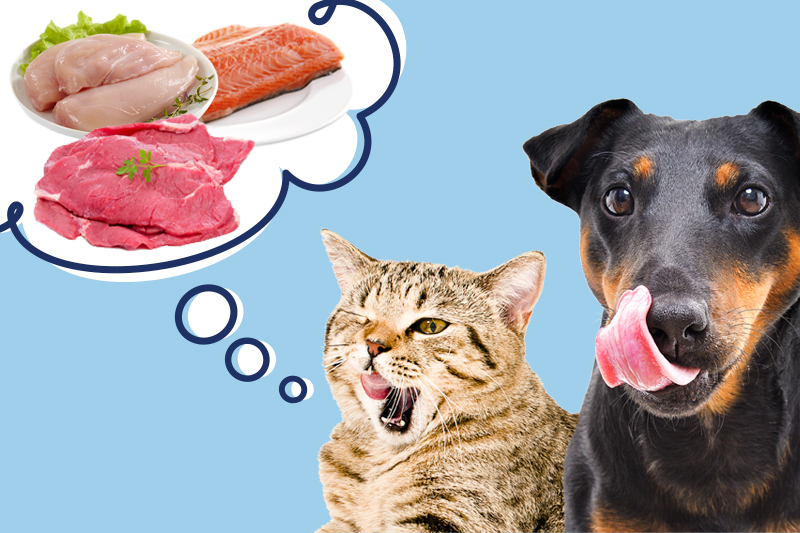
Q: In the book, The Whole Pet Diet, it is suggested that the use of cottage cheese should be limited. Can you explain why? Are there symptoms that a pet has had too much cottage cheese?

A: In general, animals lose their ability to properly digest milk products after weaning due to a decrease in the enzyme called lactase. If animals are constantly exposed to some milk products, they can re-develop proper levels of that enzyme, but in general most are almost like quasi-lactose intolerant. Cottage cheese might be too fatty or high in protein for some animals.

If a pet has been consuming some dairy throughout life, they will likely never have a problem. If dairy is new, they may have some temporary (few weeks) diarrhea while they regain some of these enzymes.

Do you need vet advice? Post a comment with your veterinary questions and we will send them to Dr. Donna Spector to be answered in a future column.

Enjoy reading the Halo Purely For Pets blog? Subscribe to our RSS feed so you’ll never miss an update!

Ask A Vet: Lyme Disease in Dogs

July 3rd, 2008 by Dr. Donna Spector

Q: We live in an area which is high risk for Lyme Disease. Our dog has been on a major brand tick and flea medication year round. We purchased the medication at our vet. Last week he showed a strong positive test to Lyme disease and is now on an antibiotic. His symptoms were lethargy, fever and limping on right back leg. He is 4 1/2 years old and the breed is Old English Sheepdog.

Could you please suggest some Halo pet products to help during this health crisis?

A: Sorry to hear your guy isn’t feeling so well right now. Has he ever been vaccinated for Lyme disease? Many dogs test strongly positive because of the vaccine and not because of true Lyme disease. Your veterinarian can run a test (called a Western Blot) to make sure that your dog’s symptoms are truly a result of Lyme disease and not another form of inflammatory arthritis.

The Old English Sheepdog is very prone to a condition called immune mediated polyarthritis, and it also can cause lethargy, fever and limping and is treated differently than Lyme disease. Regardless of the cause, there are some Halo Pet Supplements that can help. Dream Coat has omega 3 and 6 fatty acids which help with inflammation and the Hip and Joint Supplement contains glucosamine and chondroitin which can help lubricate his joints to make him more comfortable. The Hip and Joint should be used long term as many patients will have residual arthritis after the infection (Lyme) is over. Hope this helps.

Do you need vet advice? Post a comment with your veterinary questions and we will send them to Dr. Donna Spector to be answered in a future column.

Enjoy reading the Halo Purely For Pets blog? Subscribe to our RSS feed so you’ll never miss an update!

Ask a Vet: Cushing’s Disease in Dogs

June 17th, 2008 by Dr. Donna Spector

Q: My dog is a 10 year old English Bulldog. He was diagnosed with Cushing’s Disease. Currently he is taking Lysodren and we are changing his diet. Can you recommend anything we should do to help him get better?

A: Cushing’s Disease is a complex hormonal disorder that affects many body systems. Often these dogs are obese and this complicates their condition. Have your veterinarian tell you how many calories your dog requires each day in order to lose excess weight. Then choose a natural dog food with high quality proteins that will help promote a lean body. Exercise is also important for dogs with Cushing’s Disease, and as they are often overweight or intolerant to warm temperatures, swimming is an excellent form of exercise to promote weight loss and good health.

Dogs with Cushing’s Disease frequently have problems regulating their blood sugar (what we call insulin resistance). It is best to feed them a natural dog food that has limited grains (carbohydrates) in order to keep blood sugar levels lower. Exercise also helps keep their blood sugar levels in check.

If your dog with Cushing’s Disease has high blood pressure (hypertension), you should minimize the amount of salt (sodium) he eats by feeding a high quality natural dog food as well as avoiding high sodium treats (packaged treats, lunch meat, cheese and dairy products, etc).

With proper medication and appropriate diet changes, your dog with Cushing’s Disease can live a healthier and happier life.

Do you need vet advice? Post a comment with your veterinary questions and we will send them to Dr. Donna Spector to be answered in a future column.

Enjoy reading the Halo Purely For Pets blog? Subscribe to our RSS feed so you’ll never miss an update!

Ask a Vet: Help with Human and Pet Obesity

June 16th, 2008 by Dr. Donna Spector

Q: Hi, I am looking for some names of doctors that treat both pets and people with obesity. Any information that you have on this subject would be amazing.

A: Your best bet is a university-based nutritionist that deals with both human and pet obesity. Most universities have comparative medicine departments and nutrition departments and an on-line search can get you the contact number for these departments. I have recently met the following individual that specializes in this field:

Roschelle Heuberger, Ph.D., R.D., Associate Professor of Foods and Nutrition, Graduate Program Director, Department of Human Environmental Studies, Central Michigan University. 117 Wright Hall, Mount Pleasant, MI 48859, Office (989) 774-3571, Fax (989) 774-2434, heube1ra@cmich.edu.

Do you need vet advice? Post a comment with your veterinary questions and we will send them to Dr. Donna Spector to be answered in a future column.

Enjoy reading the Halo Purely For Pets blog? Subscribe to our RSS feed so you’ll never miss an update!

Ask a Vet: Dog Bladder Stones and Healthy Treats

June 12th, 2008 by Dr. Donna Spector

Q: When Maggie came to us, she had already been in two other homes. Both homes returned her to the breeder because she could not be house broken. When we got her, we noticed that she would go right where she stood, no matter where that was. I took her to my vet and he diagnosed her with a bladder infection. She was about three months old when we got her. So, looking back I can see where she has had bladder problems from a very early age. (I wonder had the first people who owned her taken her to the vet and found out what was wrong and had it treated….would it have ended up a minor infection, whereas, now, she will be forever likely to have a recurrence of the infection and more stones.) After treatment the first time she seemed better. She became house broken and we were all happy. When she again began to go where she stood, I knew the problem was back. I had never heard of dog bladder stones. She probably suffered for a long time before we began to see the symptoms.

I hope this never happens to her again. We are trying to be diligent in what she eats now. It is hard for me to withhold the treats and “people food” she loves so much. I realize now that I was literally killing her with kindness when I would give in to her pleading brown eyes and give her just about anything she wanted. If you come up with something that would be safe for her, please let me know.

A: Maggie is a lucky little girl to have found you! Thanks for sharing your story. Some treat ideas for Maggie:

Try giving her ice cubes…many dogs love them, especially in the warm weather. It is my dog’s favorite treat and she waits at the freezer door! Try making baked treats from her dog food. Put a small (dime-sized) amount of canned dog food (patted out flat) on an ungreased cookie sheet and bake for 10-15 minutes (depending on the food). This way she is getting a treat that is good for her. Small bits of unflavored rice cakes can also serve as a little crunchy treat.

Bon appétit, Maggie!

Do you need vet advice? Post a comment with your veterinary questions and we will send them to Dr. Donna Spector to be answered in a future column.

Enjoy reading the Halo Purely For Pets blog? Subscribe to our RSS feed so you’ll never miss an update!