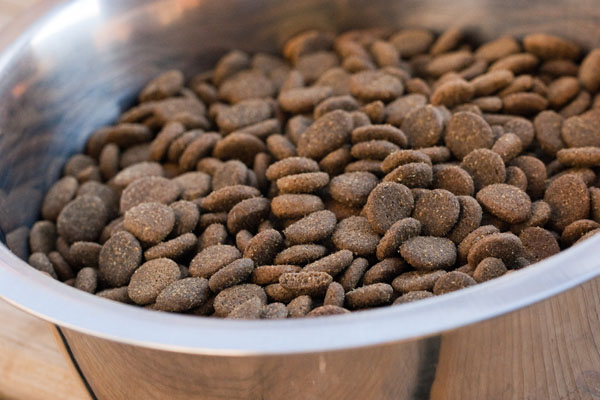

INGREDIENTS IN PET FOODS A MYSTERY TO MOST DOG AND CAT OWNERS
January 21st, 2010 by Diane Herbst
Do you REALLY know what you’re feeding your beloved dog or cat? Probably not, according to a study conducted by Harris Interactive.
The majority of pet owners don’t even read the label and have no idea what they are giving their pets, according to the study, brought to our attention by Generation Natural Pet, a social media community launched by PETCO (Halo is a founding Council Member).
Frighteningly, most pet foods — unlike Halo, which uses only real meat, fish and eggs — have chicken meal. Sounds tasty, right?
Well, dear reader, chicken meal is legally unfit for human consumption and may contain waste products from restaurants, supermarkets, meat processing facilities and packinghouses. It is not the lean muscle that WE eat, but the stuff humans are forbidden by law to consume: the remaining bones, organs, beaks and other products that are rendered (obtained by melting down the animal’s remains) in a processing plant when made into meal.
“Chicken meal sounds like something wholesome that could be served in any household,” says Halo’s veterinarian, Dr. Donna Spector. “But don’t be fooled. Meat meals — such as chicken meal — are unfit for human consumption. In my mind, that means unfit for our beloved pets.”

Yet ignorance is bliss: despite confessing no knowledge of the ingredients on a bag or can of food, the majority of the 1,305 pet owners surveyed say they treat their animals as a member of the family, and wouldn’t want to feed their pets food containing allergens and prefer to feed their pets only natural pet food.
Halo never uses chicken meal or other rendered meats. Halo uses real chicken that can be sold to humans and meets FDA human safety standards. And while we don’t advocate opening up a can of Spot’s Stewto share with your pooch, many of us have.


Question: Our Siamese has been on Vetsulin for about a year. He does have fluctuations in blood sugar which we were puzzled by as he eats the same amount, at the same time every day and has 2 shots of Vetsulin at the same time every day. Yet he has low sugars of 57 at 2 a.m. (husband is a night person) & day sugars varying from 120 to 250. It is probably the Vetsulin. Our vet told us that cats are very hard to regulate, so we attributed it to that. He is on the last bottle of Vetsulin & our vet is going to order a different insulin. This is really sad as we have had a hard time getting him kind of adjusted. Now we have to get him adjusted on a different insulin product which will mean more testing, which he hates. He doesn’t mind the shots, as he gets a treat or gets fed after it, but he hates the poking of his ears for the test. He gets treats after that too, and we hate doing this to him.
Well, it’s almost time for
Question: I have a 3 year old Cocker Spaniel and am concerned about his tear staining. I have read the pros and cons regarding Angel Eyes, and I don’t know what to do. Is the staining caused by a bacteria or yeast infection and should he get antibiotics? I don’t want to do anything that would hurt him, but I sure would like to clear up the problem. 


Network with Halo Pets on: